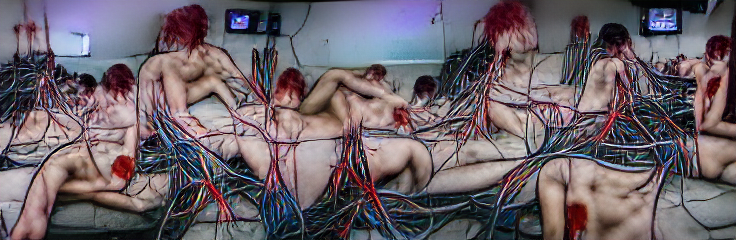
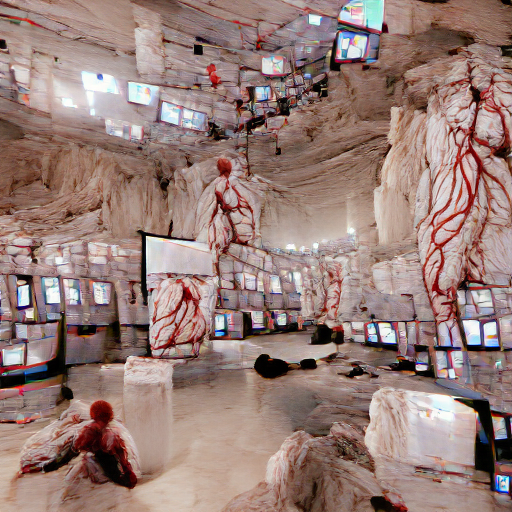
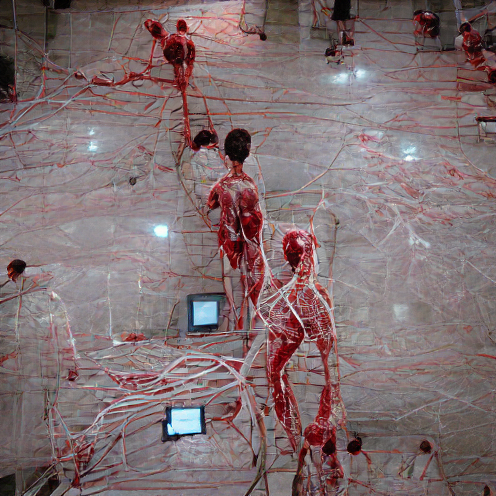
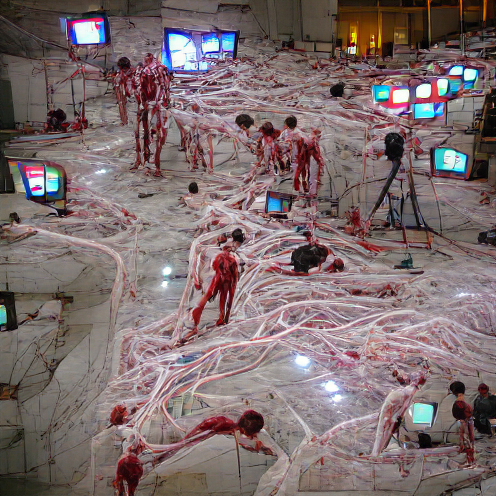
[FRENCH] Depuis 2014, une part de ma recherche interroge la mémoire post-humaine, à savoir la possibilité de la constitution d’un récit post-historique. Shape of memory était le premier versant, qui a été suivi par les différentes séries des paysages de la catastrophe, que j’ai inauguré avec l’événement de Fukushima.
La post-historicté se définit comme une histoire qui ne serait pas le résultat de la conscience humaine. La pré-histoire est la période où l’humanité n’était pas encore dans la possibilité réflexive d’écrire son histoire. La post-historicité est un état hypothétique, où d’autres formes de représentations que celle d l’homme, pourront définir ce que fut l’humanié avant sa disparition. Il s’agit en ce sens de penser une archéologie du futur. Je pose comme hypothèse que les intelligences artificielles, une fois l’homme disparu enquêteront sur cet effacement, tenteront de reconstituer, aussi ce qu’était son corps, que l’histoire de sa fin.
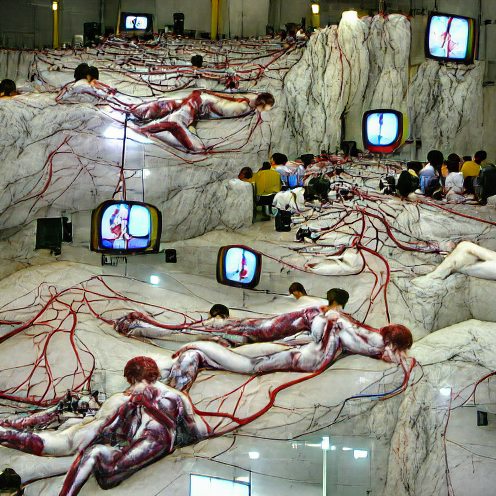
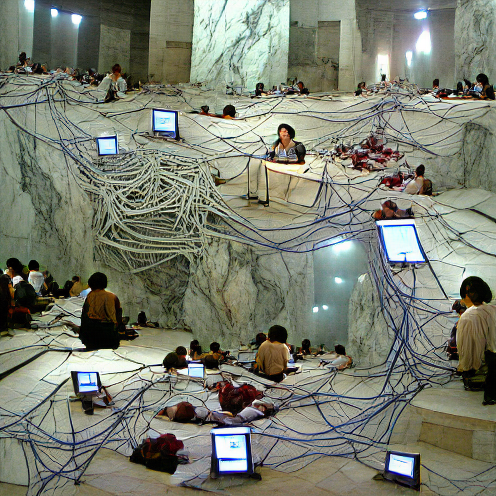
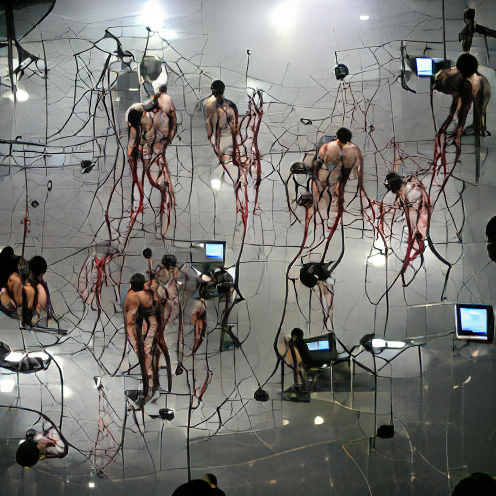
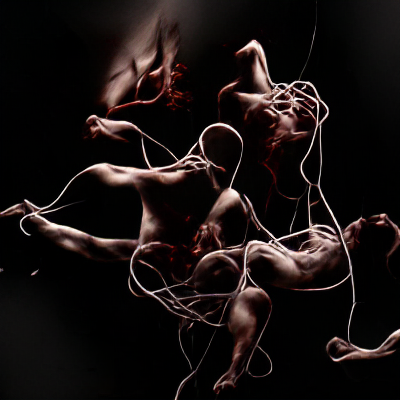
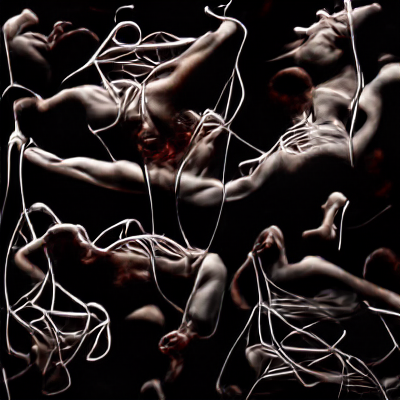
La série de création The rest of our body constitue ainsi la 5ème partie des Paysages de la catastrophe (Disaster landscape). Une intelligence artificielle tente de penser les derniers moments de l’homme et d’en donner une représentation. Elle le fait à partir de sa base de donnée. Ce qu’elle matérialise ce sont des énoncés à la fois historique et sociologique ("L’homme est enfermé dans un monde d’écran", "Le monde est exploité par l’homme" etc…) Tous les énoncés qui ont servi à créer ces images sont tirés d’articles et d’ouvrages qui mettent en évidence l’effondrement du monde humain.
[ENGLISH] Since 2014, part of my research has questioned post-human memory, namely the possibility of the constitution of a post-historical narrative. Shape of memory was the first slope, which was followed by the different series of landscapes of the disaster, which I inaugurated with the Fukushima event.
Post-historicity is defined as a story that is not the result of human consciousness. Pre-history is the period when humanity was not yet in the reflexive possibility of writing its history. Post-historicity is a hypothetical state, where other forms of representations than that of man, can define what the human being was before his disappearance. In this sense, it is a question of thinking about an archeology of the future. I hypothesize that the artificial intelligences, once the man has disappeared, will investigate this erasure, will try to reconstitute, also what his body was, as the history of his end.
The creation series The rest of our body thus constitutes the 5th part of the Landscapes of the disaster (Disaster landscape). An artificial intelligence tries to think of the last moments of man and to give a representation of them. It does this from its database. What it materializes are statements that are both historical and sociological ("Man is locked in a screen world", "The world is exploited by man" etc …) All the statements that have used to create these images are taken from articles and books that highlight the collapse of the human world.
Chaque photographie (7800X7800 pixels) est tirée à 2 exemplaires uniques (un tirage artiste et une oeuvre à vendre) en format 70cmX70cm pour les oeuvres carrées.
[French] Mon nouveau travail porte sur la question de la représentation par l’intelligence artificielle. La série "body mutation" s’interroge sur la composition du corps par une IA.
Notre perception du corps n’est pas seulement extérieure, mais elle est liée à une intuition intérieure, qui fait que nous avons toujours déjà un corps et sa représentation, même schématique. Husserl, dans Les méditations cartésiennes, se posant la question de savoir pour quelle raison, nous étions en relation à l’autre, en tant qu’homme, posait la nécessité, au niveau transcendantal d’un Leib. D’un corps premier, qui ferait que l’on se reconnaitrait à travers la présence des autres hommes. C’est ce qui fait qu’un enfant, même très jeune, dessine un corps configuré d’homme. Même s’il est très rudimentaire, fait de bâtons, ce qui apparaît c’est une structure de corps.
Les intelligences artificielles n’ont pas ce Leib. Lorsqu’on leur demande de composer un corps, si leur base de données est large, elles vont par statistique chercher à composr un corps sans l’auto-référence à ce que serait un Leib d’elle-même.
Elle inventent alors le corps, elles ne vont pas le composer selon un schéma a priori, mais elles vont tenter de le constituer : elles en ouvrent des possibles.
Ce qui m’intéresse ici c’est en quel sens tout à la fois l’IA excède le corps et le manque du fait du corps absent.
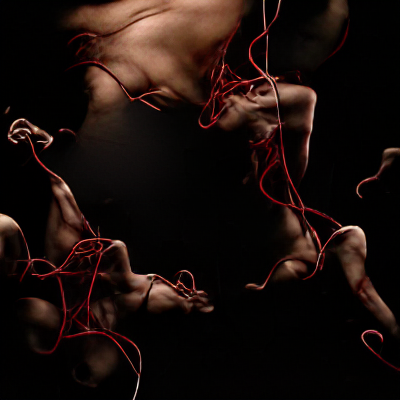
[English] My new work deals with the question of representation by artificial intelligence. The series "body mutation" questions the composition of the body by an AI.
Our perception of the body is not only external, but it is linked to an internal intuition, which means that we always already have a body and its representation, even schematic. Husserl, in Cartesian meditations, asking himself the question of knowing for what reason, we were in relation to the other, as a man, posed the necessity, at the transcendental level of a Leib. Of a primary body, which would make you recognize yourself through the presence of other men. This is what makes a child, even a very young one, draw the configured body of a man. Even though it is very rudimentary, made of sticks, what appears is a body structure.
Artificial intelligences do not have this Leib. When asked to compose a body, if their database is large, they will statistically seek to compose a body without self-reference to what a Leib of itself would be.
They then invent the body, they are not going to compose it according to an a priori scheme, but they will try to constitute it: they open up possibilities.
What interests me here is in what sense at the same time the AI exceeds the body and the lack due to the absent body.
Toutes les photographies sont faites par IA. Elles sont en haute résolution (dimension 70cmX70cm) et sont tirées à 2 exemplaires chacune sur dibond.
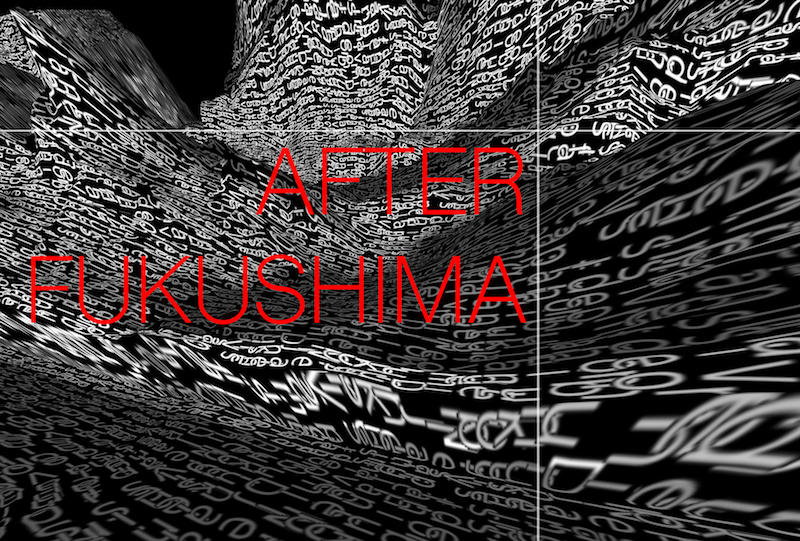
Un paysage sans reste d’humanité se crée de manière continue. Il est un reflet poétique d’une terre dont nulle conscience n’est plus témoin. Il y a eu destruction. Cette terre, c’est Fukushima. Elle est désolée. Il ne reste qu’un paysage sombre, sans hommes, sans faune ou flore. Seuls quelques vestiges de constructions peuvent apparaître. Pour cette nouvelle création, Philippe Boisnard s’associe à Jacques Urbanska et à sa veille twitter @fukushima_actu pour générer le paysage médiatique de la catastrophe qui s’est produite en 2011.
> Ce paysage se modifie automatiquement par l’analyse des flux d’informations concernant Fukushima mis en ligne sur le Web.
Sa texture de couleur est faite des images qui ont été diffusées ou sont encore diffusées par le twitter @fukushima_ actu.
Ce paysage est post-historique. Il n’écrit plus l’histoire. Il est le reflet d’un monde où l’homme a disparu, mais dont il ne reste plus que les traces sous la forme des archives. Une caméra automatique explore ce paysage : nous faisons face à sa solitude. Le terme de solitude est ancien, il renvoie au XVIIème siècle à une friche, à un noman’s land.
english :
A landscape without humanity is created continuously. It is a poetic reflection of a land that no consciousness is no longer witness. There was destruction. This land is Fukushima. It is devastated. There is only a dark landscape without men, without fauna or flora. Only a few remains of buildings may appear.
For this new creation, Boisnard Philippe joins Jacques Urbanska and its twitter @fukushima_actu to generate the media landscape of the disaster that occurred in 2011.
The landscape changes automatically by analyzing the flow of information about Fukushima posted on the Web.
Color texture is made pictures that were released or are still distributed by the twitter @fukushima_ news.
This is post-historic landscape. He no longer writes history. It is a reflection of a world where man has gone, but there remains the traces in the form of archives. An automatic camera explores the landscape: we face loneliness. loneliness of the term is old, it returns to the seventeenth century in a wasteland, a no man’s land.
creation : Philippe Boisnard
database Jacques Urbanska
sound Philippe Franck
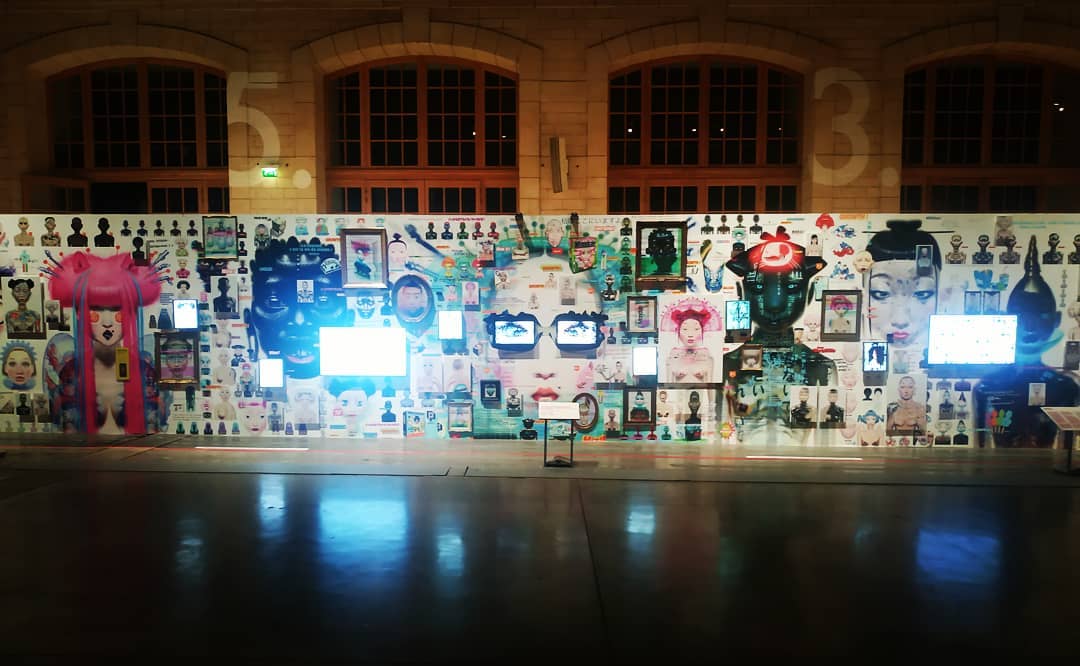
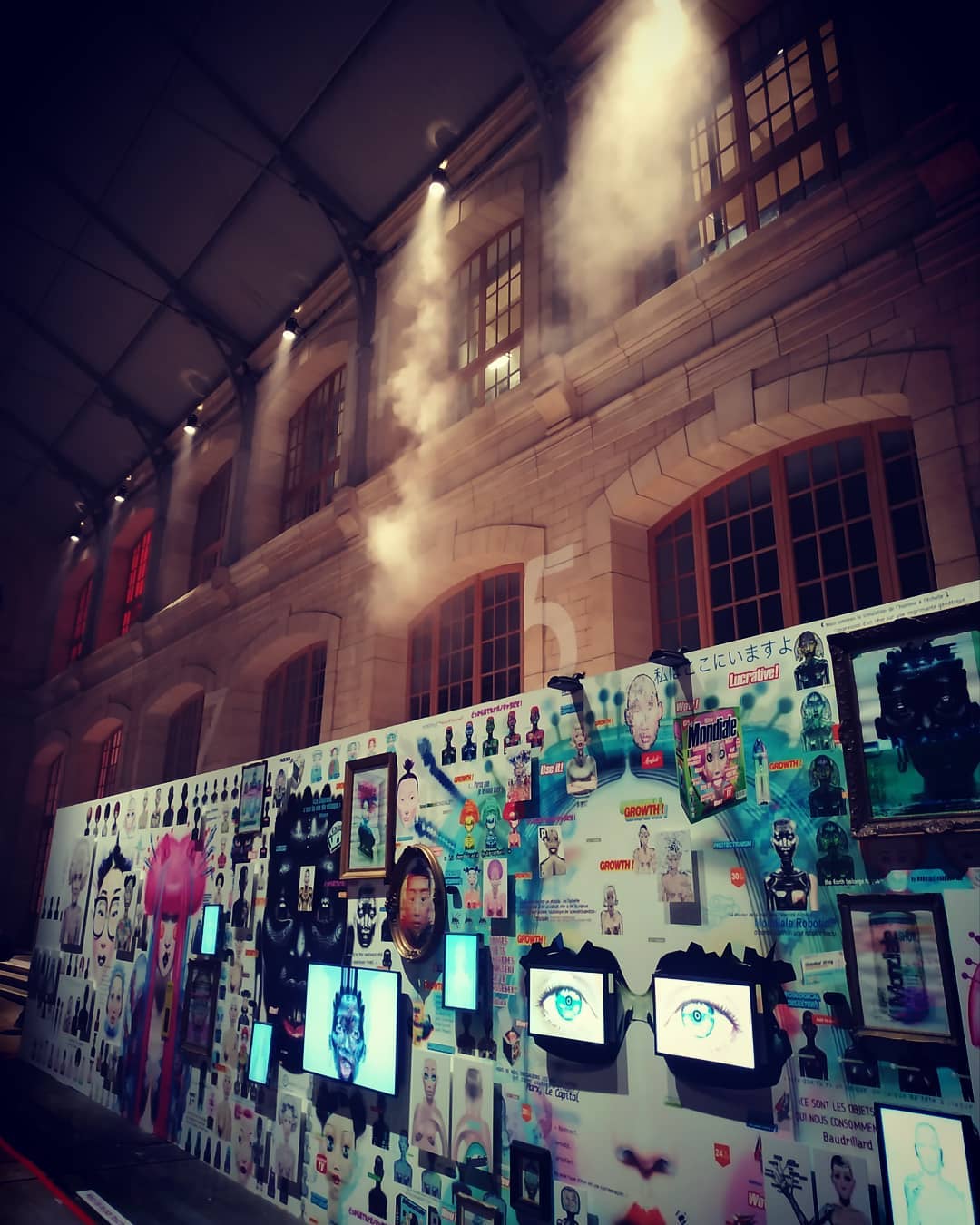
Pour la biennale NEMO 2019, troisième collaboration avec Beb-Deum. Création de la scénographie multimédia. Dans l’immense fresque de 20 mètres, création d’écran de glitchs des dessins de Beb-Deum et création de deux écrans d’yeux pour le milieu.
L’oeuvre travaille sur la prolifération et l’altération de l’humain dans la société post-capitaliste.