L’archive Impossible
Archive impossible
Sur l’image d’un événement qui n’aura jamais eu lieu
L’interdit de l’image
Il y a des guerres qui nous parviennent par excès d’images et d’autres par leur défaut. Le conflit qui oppose Israël au Hamas appartient, en grande partie, à la seconde catégorie. Depuis octobre 2023, l’accès indépendant des journalistes à la bande de Gaza est refusé ; les organisations de défense de la presse, au premier rang desquelles le Comité pour la protection des journalistes (CPJ), documentent une interdiction quasi totale d’accès médiatique international, doublée d’une censure et d’un nombre de journalistes tués sans précédent dans l’histoire récente. Quelques photographies nous parviennent, arrachées au siège ; d’innombrables événements, eux, demeurent sans trace.
Ce que cette situation institue, ce n’est pas seulement une lacune informationnelle : c’est un interdit de l’image, une logique de l’image manquante érigée en politique du visible. La privation de documentation n’est pas un accident, elle est produite. Et elle pose, frontalement, la question de l’archive et de la trace : que reste-t-il quand le « ça-a-été » photographique — ce que Roland Barthes nommait le noème même de la photographie, l’attestation qu’une chose a réellement été là — n’a pas pu avoir lieu, faute d’appareil, faute d’œil, faute de droit ?
À cet interdit répond, en miroir, une saturation. Le vide documentaire n’a pas produit le silence : il a produit le faux. Les chercheurs parlent aujourd’hui de « militarisme synthétique » (Kuntsman et Stein, 2026) pour décrire la production industrielle d’images d’atrocité générées par IA ; d’autres analysent l’« esthétique de l’absence » de ces images, qui suscite la compassion tout en dépolitisant la scène. Le champ visuel de cette guerre est donc tendu entre deux pôles : une absence imposée et une fabrication proliférante. Archive impossible travaille exactement dans cet écart — et doit, pour exister, s’en démarquer absolument.
Du « ça-a-été » au « cela aurait pu être »<br />
Mon geste est un déplacement modal. Là où Barthes ancrait la photographie dans l’indicatif passé — le référent a été, nécessairement réel —, je fais glisser l’image vers le conditionnel, vers un futur antérieur négatif : non plus le « ça-a-été », mais le cela aurait pu être. Et plus radicalement encore : l’image d’un possible qui n’aura jamais eu lieu.
L’espace latent rend ce déplacement pensable. Si l’on admet qu’il est la possibilité du possible — un réservoir de configurations d’images jamais actualisées —, alors il peut faire office d’archive d’un autre genre. Non l’archive de ce qui fut, mais l’archive d’un virtuel, saisi dans sa fragilité, son impossibilité. C’est ici que je rejoins Ariella Aïsha Azoulay : sa notion d’« histoire potentielle » (Potential History, 2019), prolongeant le « contrat civil de la photographie », pense l’événement photographique comme porteur de potentialités non réalisées, dont le regardeur reste comptable. Mon « archive du possible » en est le pendant plastique : rendre visible non ce qui a été enregistré, mais ce qui aurait pu l’être. Mais non pas dans sa perfection mimétique au réel, mais dans une suspension de la génération.
C’est aussi pourquoi l’archive, ici, ne regarde pas vers le passé. Jacques Derrida, dans Mal d’archive (1995), rappelle que la question de l’archive n’est pas affaire de passé mais d’avenir, de promesse et de spectralité. L’image latente n’exhume rien : elle promet un événement, le fait revenir comme revenant. Et ce que Deleuze nommait la « puissance du faux » (L’Image-temps, 1985) n’est pas ici un mensonge sur l’actuel, mais la cristallisation d’un virtuel — la seule manière, peut-être, de donner forme à ce que l’interdit a soustrait au réel.
L’image manquante
Je ne suis pas seul sur ce seuil, et m’y inscrire est une manière de me prémunir contre le soupçon de fabrication. Le titre même de ma série salue Rithy Panh : face à l’absence d’images du génocide khmer rouge, L’Image manquante (2013) ne simule pas le réel disparu — elle en figure le manque par des figurines d’argile, assumant l’écart entre la trace et l’événement. Ma démarche est structurellement la sienne, transposée au diffusionnel : non combler le trou, mais le rendre sensible.
Georges Didi-Huberman offre la formule qui m’accompagne. Dans Images malgré tout (2003), réfléchissant aux quatre photographies arrachées à Auschwitz, il défend l’image comme à la fois nécessaire et insuffisante, ni toute-puissante ni nulle : il faut imaginer « malgré tout », contre l’argument de l’inimaginable. Produire l’image malgré l’impossibilité, sans jamais la prétendre totale ni probante : voilà ma règle. À quoi répond la « lacune » du témoignage chez Giorgio Agamben (Ce qui reste d’Auschwitz, 1999), cette impossibilité structurelle de témoigner pleinement, dont le « témoin intégral » est la figure muette. Mon entre-deux est une manière plastique de rendre cette lacune — non de la suturer.
Et c’est encore le programme de Jean-François Lyotard : présenter qu’il existe de l’imprésentable (Le Différend, 1983). Rendre le manque de l’image dans la fragilité de son indécision, ce n’est rien d’autre que cela — faire voir qu’il y a quelque chose qui ne se laisse pas voir.
L’entre-deux : ce que le noise rend visible
Ma question la plus insistante n’est pas « quelle image manque ? » mais « que se passe-t-il entre deux images ? ». Entre deux prises de vue subsiste un intervalle, et c’est dans cet intervalle qu’opère l’interdit : non dans l’image absente prise une à une, mais dans le brouillard qui sépare et relie celles qui demeurent.
La pensée de l’intervalle a une histoire. Deleuze en fait le lieu même de la pensée cinématographique : l’interstice, la coupure irrationnelle, l’« entre-deux images » où le tout cesse d’être donné. Raymond Bellour en fait un territoire propre (L’Entre-images, 1990). Et Aby Warburg, avant eux, nommait Zwischenraum — l’espace-entre — cet écart entre les images où le sens advient, principe de son Atlas Mnemosyne tel que l’a relu Didi-Huberman. Mon travail est une iconologie de cet intervalle.
Mais ici la théorie et la technique coïncident matériellement, et c’est le cœur de la série. Dans un modèle de diffusion, le noise n’est pas une métaphore : c’est le substrat littéral de l’image, le bruit gaussien d’où le débruitage fait lentement émerger une forme. Travaillant sous ComfyUI, et avec un modèle de diffusion que j’entraîne moi-même — interpolations slerp entre deux codes latents, inversion DDIM, sous-capacité délibérée comme levier esthétique —, je fais de l’« entre-deux » un objet opérable. Le chemin de débruitage devient l’intervalle ; la zone sous-déterminée de l’espace latent devient le brouillard entre deux prises de vue. Le brouillard de la guerre, indécision épistémique, et le bruit du modèle, indécision générative, se rejoignent dans une même opération. C’est cette double indécision que la série rend visible.
On mesure ici, par contraste, ce que je ne fais pas. Les « images opératoires » de Harun Farocki sont des images sans destinataire humain, faites pour la machine et la cible. Les miennes font l’inverse : elles rendent l’absence à l’œil, elles réclament un regard et une lenteur.
Le partage du visible
L’interdit de l’image est aussi un partage : une décision sur ce qui a le droit d’apparaître. Jacques Rancière nomme « partage du sensible » cette distribution de ce qui se laisse voir et dire, et interroge, dans Le Spectateur émancipé, l’« image intolérable » qui excède le régime de l’admissible. Judith Butler, dans Ce qui fait une vie (2009), pense le « cadre » qui décide quelles vies sont dignes d’être pleurées, quelles existences peuvent même apparaître : la distribution différentielle de la pleurabilité. Quand le journalisme est interdit, c’est ce cadre qui se referme — certaines vies sont soustraites au visible avant de l’être à la vie. Et Susan Sontag, Devant la douleur des autres (2003), demeure la balise éthique : se garder de l’image qui console, comme de celle qui anesthésie.
Contre le simulacre : rendre le manque
Il faut nommer le risque, parce qu’on me l’objectera. Formellement, générer l’image d’un événement non photographié ressemble à la fabrication d’images d’atrocité que dénonce la critique contemporaine. La différence est tout — et elle est théorisable.
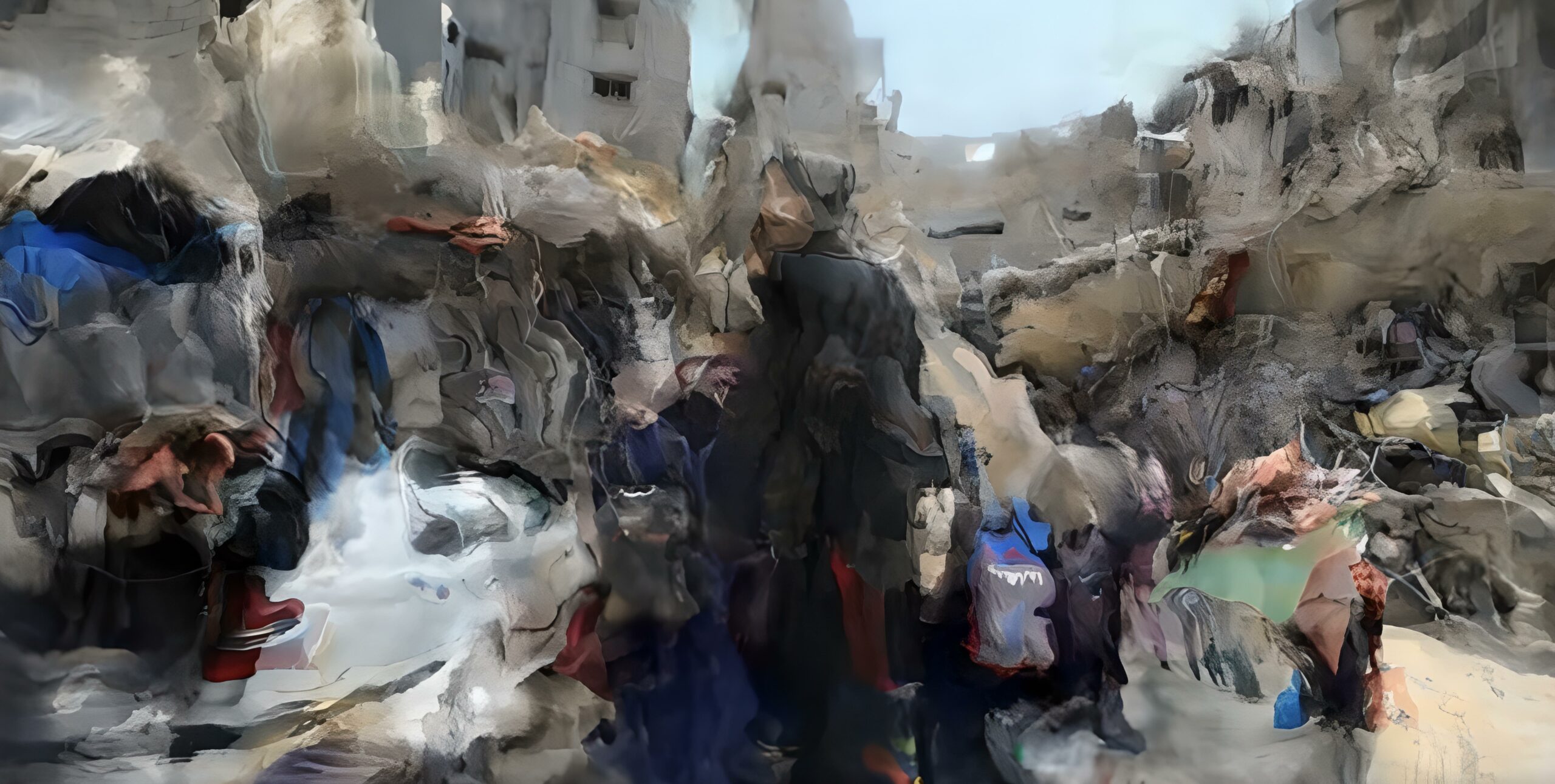
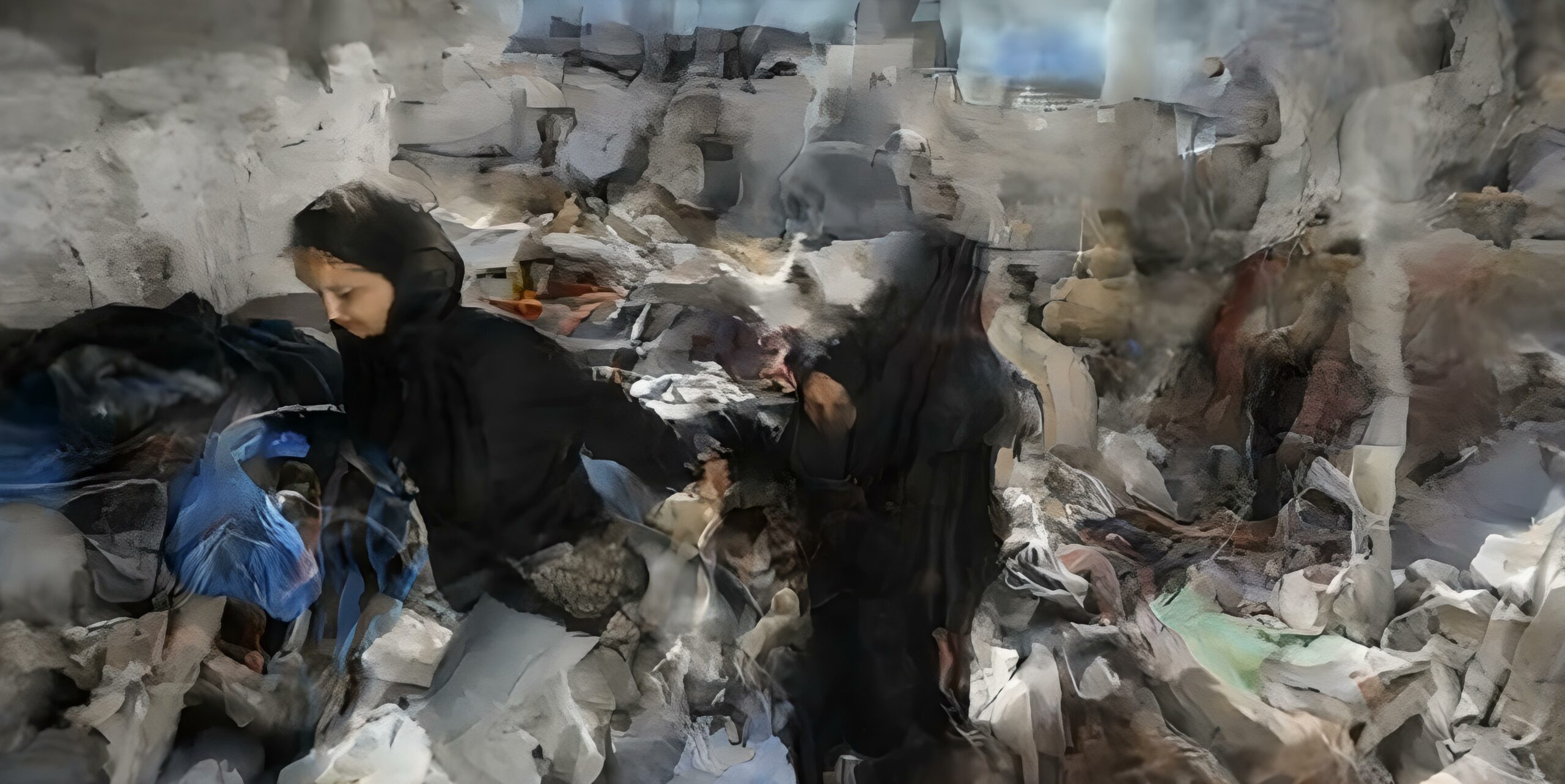
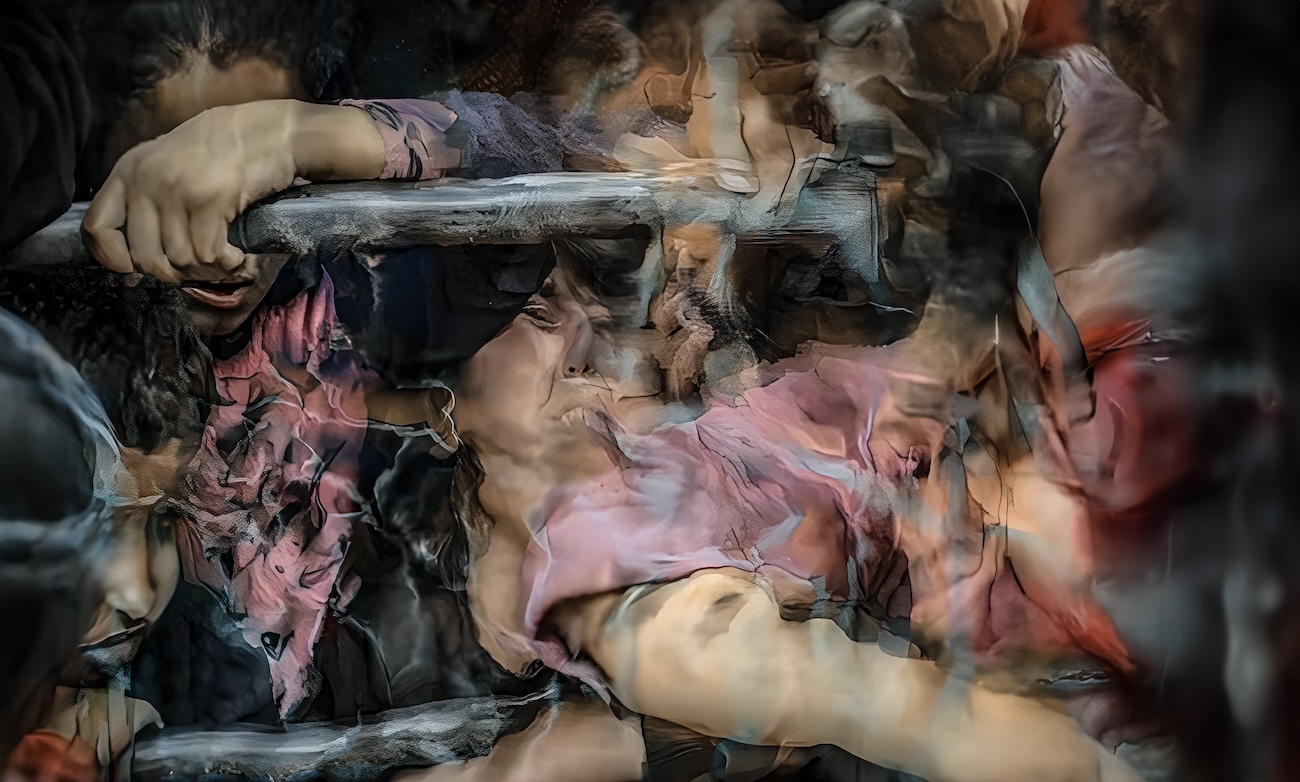
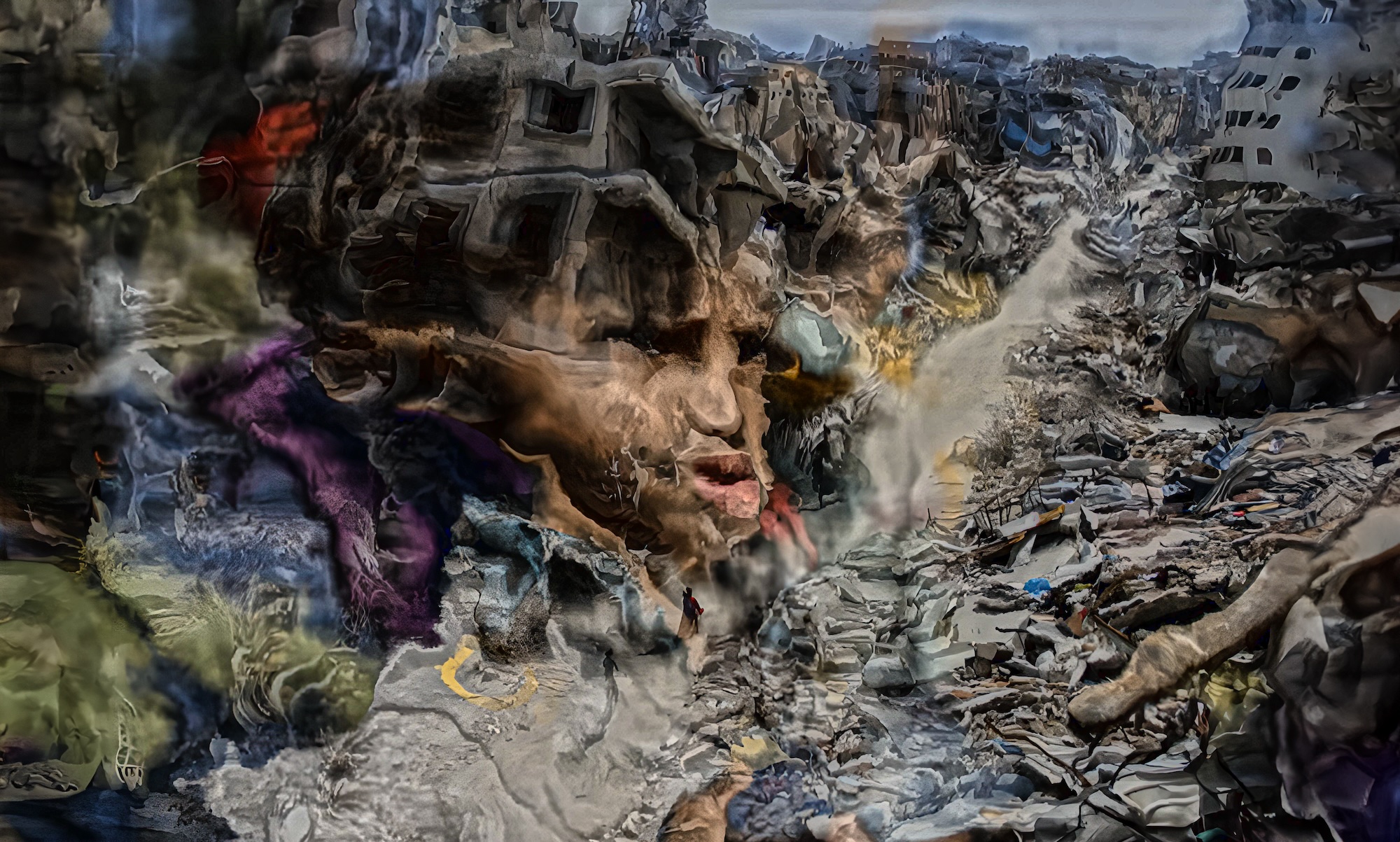
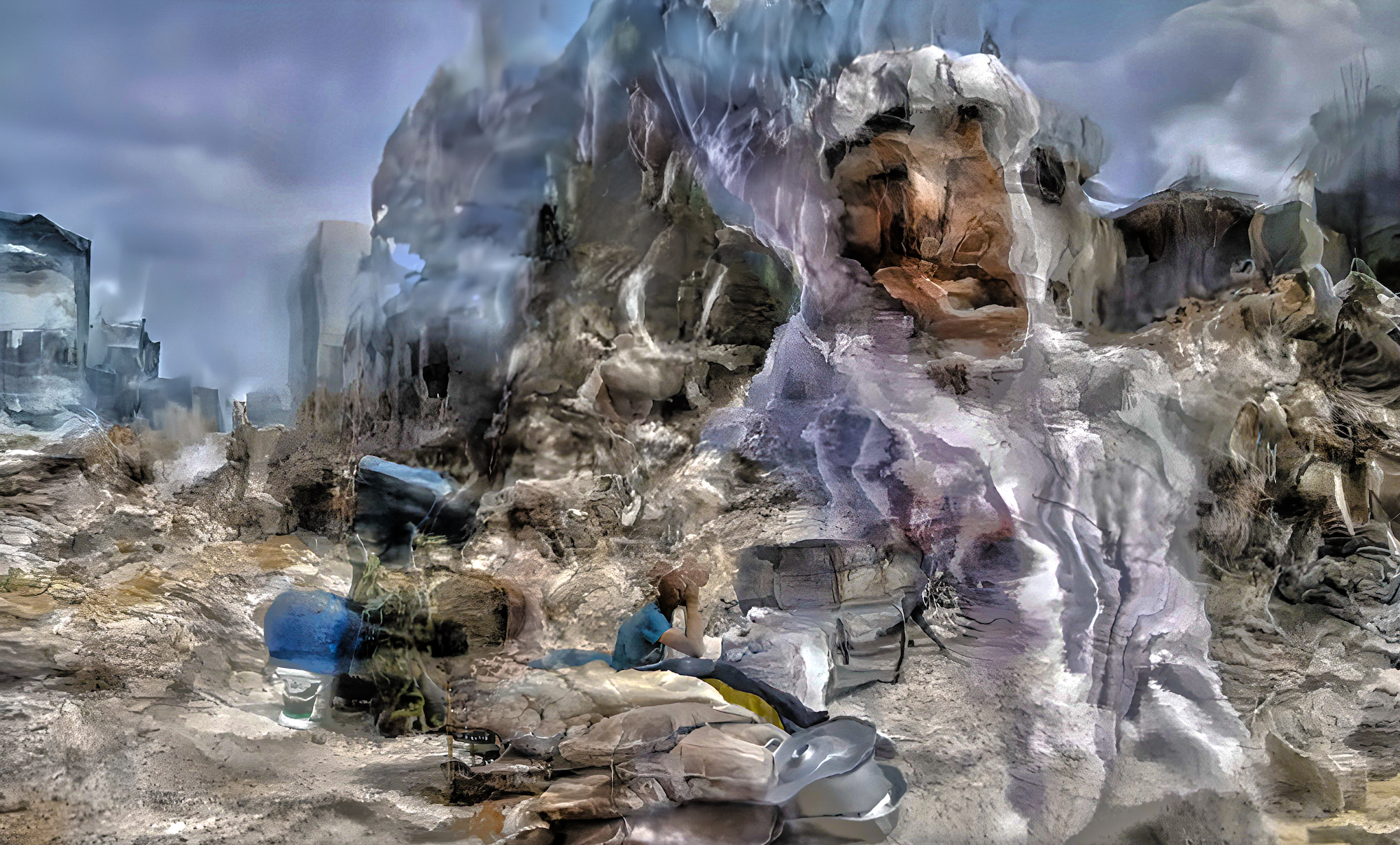
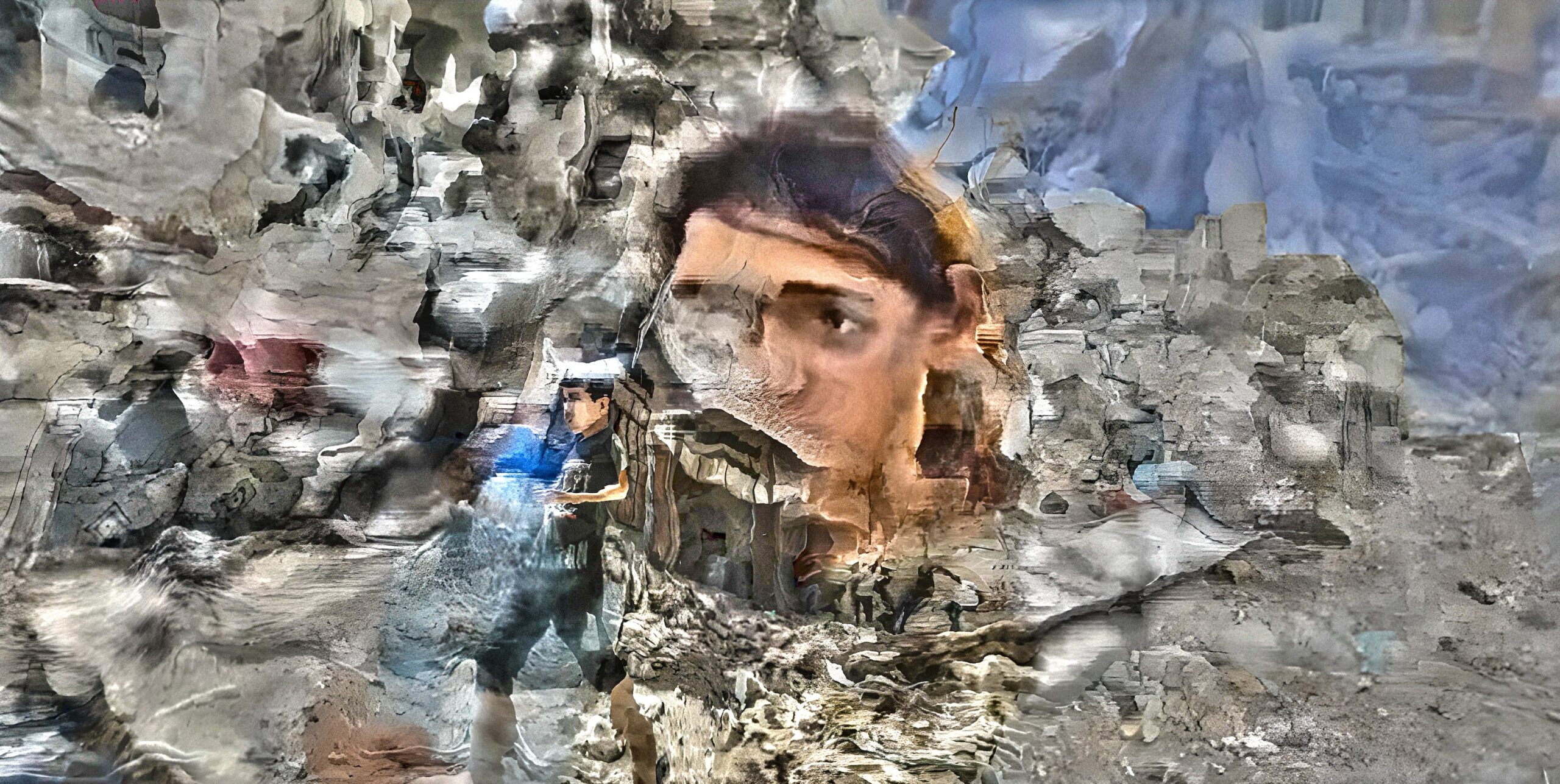
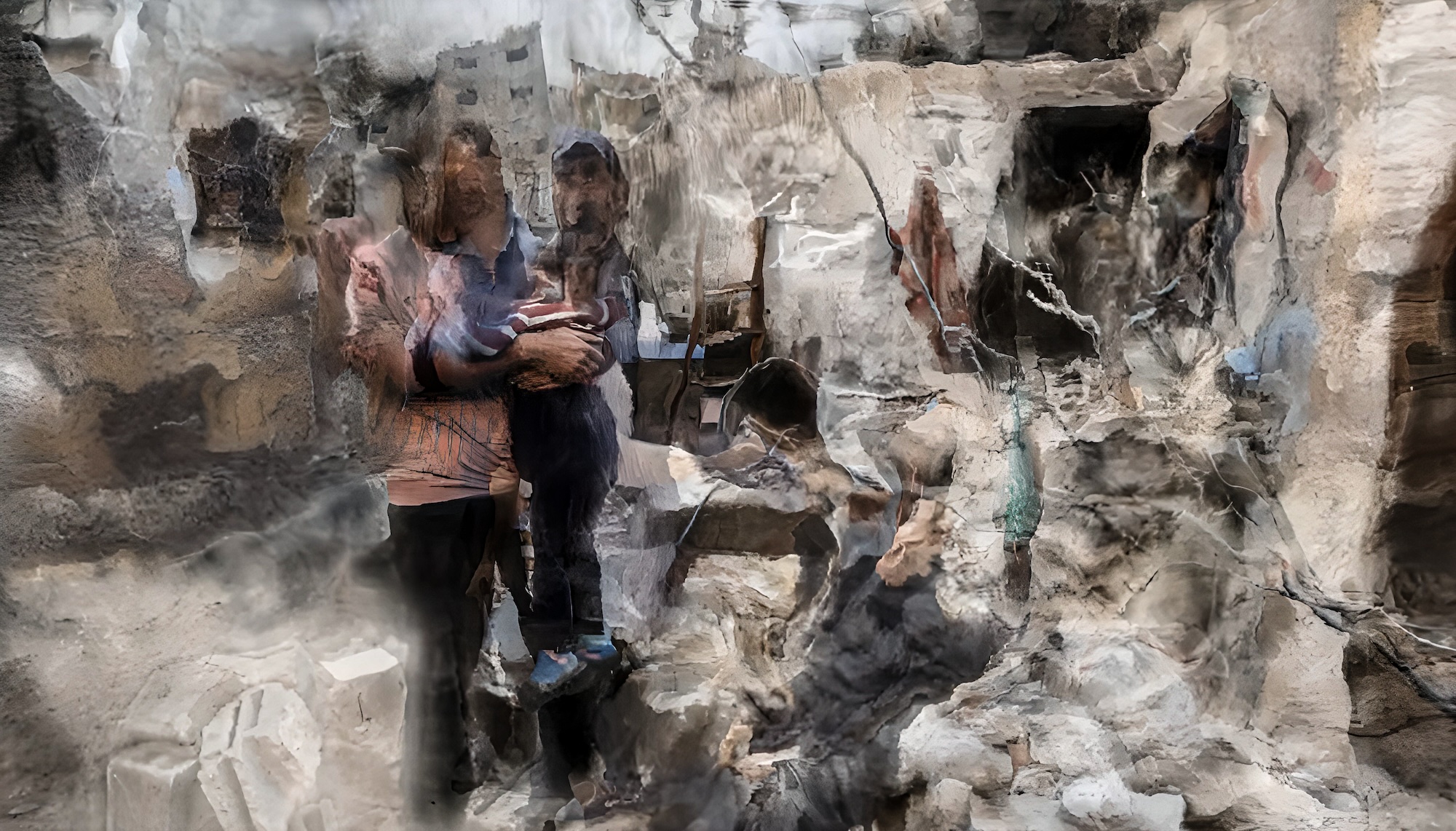
Mon image ne contrefait pas une présence : elle indexe une absence. Là où l’image de propagande synthétique produit un faux « ça-a-été », un simulacre qui passe pour preuve, Archive impossible inscrit le manque dans l’image. L’indécision, le flou, le bruit n’y sont pas un style mais un opérateur épistémique : ils déclarent le statut non probatoire de l’image, ils l’empêchent de se faire passer pour document. C’est la traduction plastique exacte du « malgré tout » de Didi-Huberman et de l’imprésentable lyotardien.
C’est pourquoi je me tiens aussi à l’opposé de la contre-forensique. Forensic Architecture et Eyal Weizman reconstruisent l’événement supprimé à partir de traces matérielles : démarche probatoire, qui rend au réel sa preuve. Je fais l’inverse. Je ne reconstitue pas ce qui a eu lieu ; je figure ce qui aurait pu avoir lieu, précisément parce que cela ne peut pas être su. Là où la forensique vise la détectabilité, je vise l’indécidable. La série ne se substitue pas par la simulation au réel : elle maintient ouvert l’écart, et fait de cet écart son sujet.
Une mémoire allogénétique
C’est dans mon propre appareil conceptuel que la série trouve sa place. Archive impossible est le négatif de Complétion (le réel sera son double), où je complétais des photographies historiques : là je prolongeais une image existante, ici je génère l’image d’un événement jamais capté. Ce que j’appelle pararéalisme — un réel à côté du réel, et non contre lui — y atteint son cas le plus pur ; la mémoire allogénétique n’est plus seulement la mémoire de ce que le modèle produit d’ailleurs, elle devient l’archive de possibles événementiels jamais actualisés ; et la rémanence achronique se fait persistance d’un non-événement, image qui revient sans avoir jamais eu lieu.
L’espace latent, dès lors, n’est pas un magasin du « ça-a-été » : il est l’archive d’un « cela aurait pu être ». Une ontologie sans ontologie, appliquée non plus à la géométrie latente en général, mais à l’événement lui-même.
La série commencée avec le conflit ukrainien trouve ici sa seconde station. D’une guerre à l’autre, ce n’est pas une chronique que je construis, mais une iconologie de l’intervalle — une manière de tenir, face à l’interdit de l’image, non la consolation d’un faux témoignage, mais la fidélité au manque.
// ENGLISH
Impossible Archive
On the image of an event that will never have taken place
The Prohibition of the Image
Some wars reach us through an excess of images, others through their dearth. The conflict between Israel and Hamas belongs, in decisive part, to the second category. Since October 2023, independent journalistic access to the Gaza Strip has been denied; press-freedom organizations, foremost among them the Committee to Protect Journalists (CPJ), have documented a near-total ban on independent international media access, compounded by censorship and a death toll among journalists without precedent in recent history. A few photographs reach us, wrested from the siege; countless events remain without a trace.
What this situation institutes is not merely an informational gap: it is a prohibition of the image, a logic of the missing image erected into a politics of the visible. The deprivation of documentation is no accident; it is produced. And it raises, head-on, the question of the archive and of the trace: what remains when the photographic “that-has-been” — what Roland Barthes called the very noeme of photography, the attestation that a thing was really there — could not take place, for want of a camera, of an eye, of a right?
To this prohibition there answers, as in a mirror, a saturation. The documentary void did not produce silence: it produced the false. Researchers now speak of “synthetic militarism” (Kuntsman and Stein, 2026) to describe the industrial production of AI-generated atrocity imagery; others analyze the “aesthetic of absence” of such images, which arouses compassion while depoliticizing the scene. The visual field of this war is thus stretched between two poles: an imposed absence and a proliferating fabrication. Impossible Archive works precisely within that gap — and must, in order to exist, set itself absolutely apart from it.
From the “That-Has-Been” to the “That-Could-Have-Been”
My gesture is a modal displacement. Where Barthes anchored photography in the past indicative — the referent was, necessarily real — I shift the image toward the conditional, toward a negative future perfect: no longer the “that-has-been,” but the that-could-have-been. And more radically still: the image of a possible that will never have taken place.
The latent space makes this displacement thinkable. If we grant that it is the possibility of the possible — a reservoir of image-configurations never actualized — then it can serve as an archive of another kind. Not the archive of what was, but the archive of a virtual. It is here that I join Ariella Aïsha Azoulay: her notion of “potential history” (Potential History, 2019), extending the “civil contract of photography,” conceives the photographic event as bearing unrealized potentialities for which the viewer remains accountable. My “archive of the possible” is its plastic counterpart: to render visible not what was recorded, but what could have been.
This is also why the archive, here, does not look toward the past. Jacques Derrida, in Archive Fever (1995), reminds us that the question of the archive is not a matter of the past but of the future, of promise and of spectrality. The latent image exhumes nothing: it promises an event, brings it back as a revenant. And what Deleuze called the “powers of the false”(The Time-Image, 1985) is not, here, a lie about the actual, but the crystallization of a virtual — perhaps the only way to give form to what the prohibition has subtracted from the real.
The Missing Image
I am not alone on this threshold, and to inscribe myself within it is one way of guarding against the suspicion of fabrication. The very title of my series salutes Rithy Panh: faced with the absence of images of the Khmer Rouge genocide, The Missing Picture (2013) does not simulate the vanished real — it figures its lack through clay figurines, assuming the gap between the trace and the event. My approach is structurally his, transposed to the diffusional: not to fill the hole, but to make it perceptible.
Georges Didi-Huberman offers the formula that accompanies me. In Images in Spite of All (2003), reflecting on the four photographs wrested from Auschwitz, he defends the image as at once necessary and insufficient, neither all-powerful nor null: one must imagine “in spite of all,” against the argument of the unimaginable. To produce the image despiteimpossibility, without ever claiming it to be total or probative: that is my rule. To which answers the “lacuna” of testimony in Giorgio Agamben (Remnants of Auschwitz, 1999), that structural impossibility of bearing full witness, whose “complete witness” is the mute figure. My in-between is a plastic way of rendering that lacuna — not of suturing it.
And it remains the program of Jean-François Lyotard: to present that there exists something unpresentable (The Differend, 1983). To render the lack of the image in the fragility of its undecidedness is nothing other than this — to make visible that there is something that does not let itself be seen.
The In-Between: What Noise Makes Visible
My most insistent question is not “which image is missing?” but “what happens between two images?” Between two shots there subsists an interval, and it is within that interval that the prohibition operates: not in the absent image taken one by one, but in the fog that separates and binds those that remain.
The thought of the interval has a history. Deleuze makes it the very site of cinematic thought: the interstice, the irrational cut, the “between-two-images” where the whole ceases to be given. Raymond Bellour makes of it a territory in its own right (Between-the-Images, 1990). And Aby Warburg, before them, named Zwischenraum — the in-between space — that gap between images where meaning arises, the principle of his Mnemosyne Atlas as reread by Didi-Huberman. My work is an iconology of that interval.
But here theory and technique coincide materially, and this is the heart of the series. In a diffusion model, noise is not a metaphor: it is the literal substrate of the image, the Gaussian noise out of which denoising slowly brings a form to emerge. Working in ComfyUI, and with a diffusion model I train myself — slerp interpolations between two latent codes, DDIM inversion, deliberate under-capacity as an aesthetic lever — I make the “in-between” an operable object. The denoising path becomes the interval; the under-determined zone of the latent space becomes the fog between two shots. The fog of war, an epistemic undecidedness, and the model’s noise, a generative undecidedness, meet in one and the same operation. It is this double undecidedness that the series makes visible.
One measures here, by contrast, what I do not do. The “operational images” of Harun Farocki are images with no human addressee, made for the machine and the target. Mine do the opposite: they render absence to the eye, they call for a gaze and for slowness.
The Distribution of the Visible
The prohibition of the image is also a distribution: a decision about what has the right to appear. Jacques Rancière names this “distribution of the sensible” — the partitioning of what may be seen and said — and interrogates, in The Emancipated Spectator, the “intolerable image” that exceeds the regime of the admissible. Judith Butler, in Frames of War (2009), thinks the “frame” that decides which lives are worthy of being mourned, which existences may even appear: the differential distribution of grievability. When journalism is forbidden, it is this frame that closes — certain lives are withdrawn from the visible before being withdrawn from life. And Susan Sontag, Regarding the Pain of Others (2003), remains the ethical marker: to beware of the image that consoles, as of the one that anesthetizes.
Against the Simulacrum: Rendering the Lack
The risk must be named, because it will be raised against me. Formally, to generate the image of an unphotographed event resembles the fabrication of atrocity imagery that contemporary criticism denounces. The difference is everything — and it is theorizable.
My image does not counterfeit a presence: it indexes an absence. Where synthetic propaganda imagery produces a false “that-has-been,” a simulacrum that passes for proof, Impossible Archive inscribes the lack within the image. The undecidedness, the blur, the noise are not a style there but an epistemic operator: they declare the image’s non-probative status, they prevent it from passing itself off as a document. This is the exact plastic translation of Didi-Huberman’s “in spite of all” and of the Lyotardian unpresentable.
This is why I also stand at the opposite pole from counter-forensics. Forensic Architecture and Eyal Weizmanreconstruct the suppressed event from material traces: an evidentiary approach, which restores its proof to the real. I do the inverse. I do not reconstitute what took place; I figure what could have taken place, precisely because it cannot be known. Where forensics aims at detectability, I aim at the undecidable. The series does not substitute simulation for the real: it holds the gap open, and makes of that gap its very subject.
An Allogenetic Memory
It is within my own conceptual apparatus that the series finds its place. Impossible Archive is the negative of Completion (the real will be its double), in which I completed historical photographs: there I extended an existing image, here I generate the image of an event never captured. What I call pararealism — a real alongside the real, and not against it — attains here its purest case; allogenetic memory is no longer only the memory of what the model produces from elsewhere, it becomes the archive of eventual possibles never actualized; and achronic remanence becomes the persistence of a non-event, an image that returns without ever having taken place.
The latent space, henceforth, is not a storehouse of the “that-has-been”: it is the archive of a “that-could-have-been.” An ontology without ontology, applied no longer to latent geometry in general, but to the event itself.
The series begun with the Ukrainian conflict finds here its second station. From one war to the next, what I construct is not a chronicle but an iconology of the interval — a way of holding, in the face of the prohibition of the image, not the consolation of a false testimony, but fidelity to the lack.